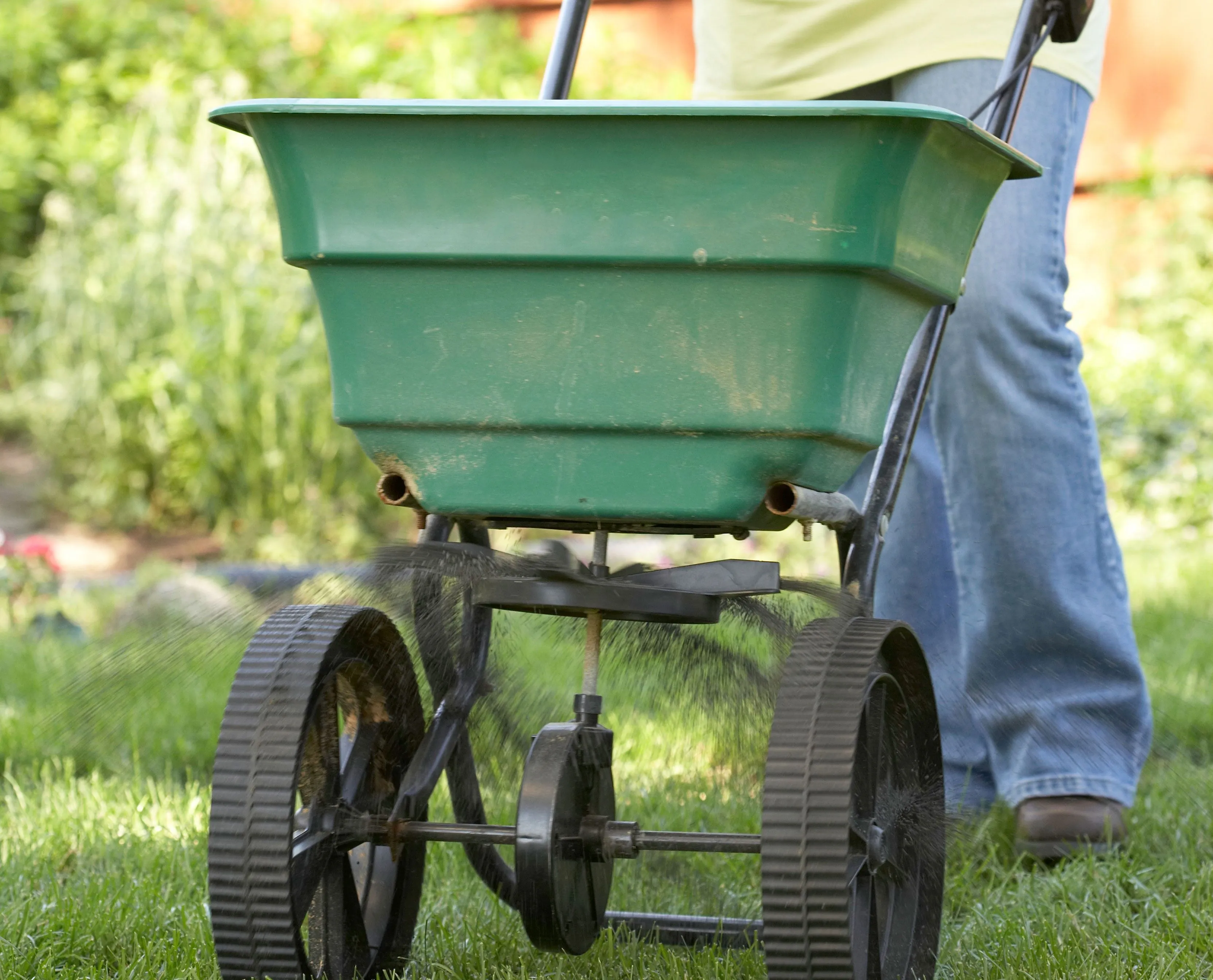
- Continue deadheading, watering, and fertilizing as needed.
- Replenish mulch to retain moisture and suppress weeds, and stake tall varieties.
- Protect dahlias from light frosts with frost cloth to extend bloom time by several weeks.
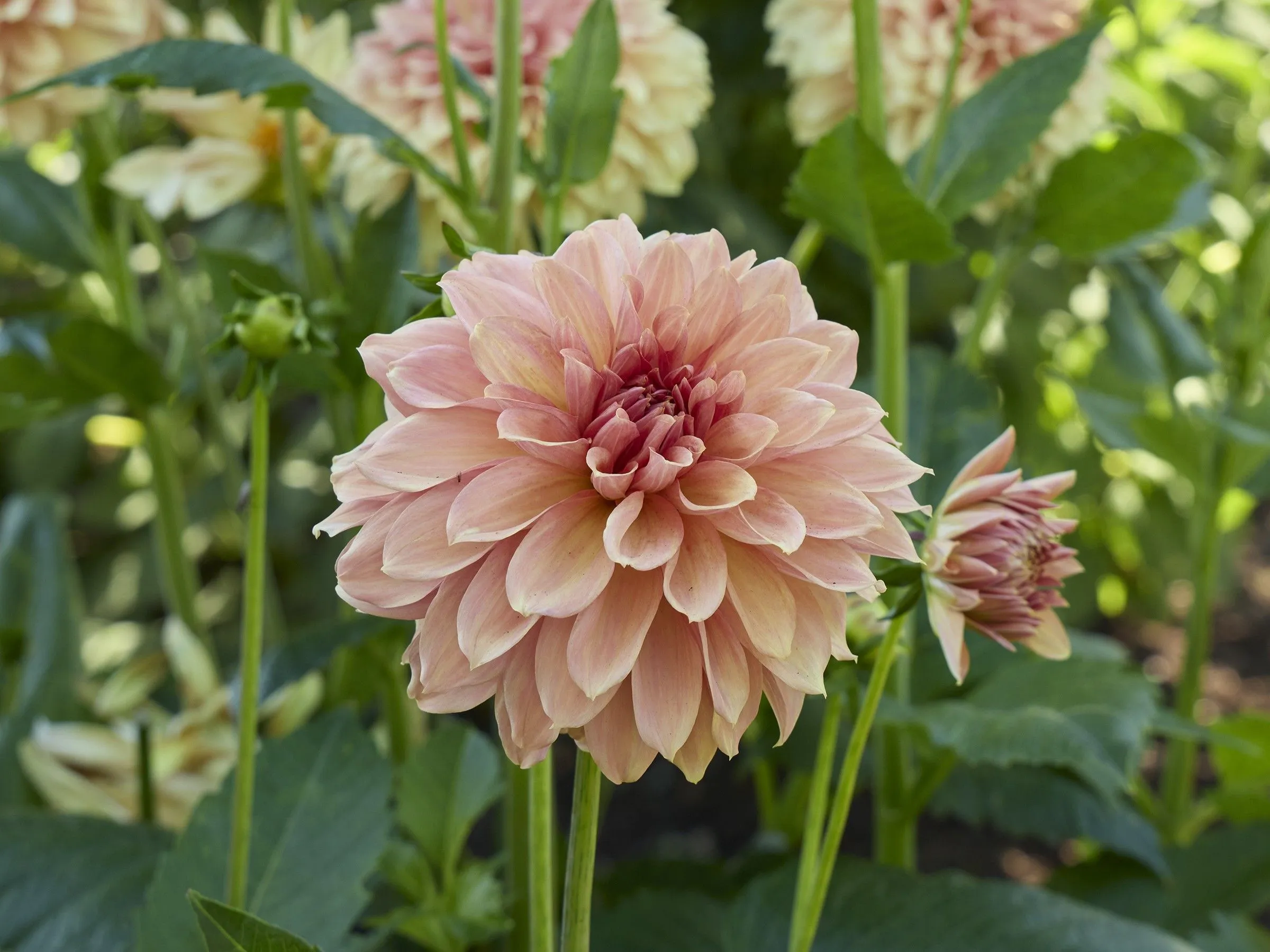
Dahlias can keep blooming until frost arrives, as long as you keep them healthy. If their basic needs are met, they’ll continue pushing blooms until their stems freeze. Here’s what to do in September to help your dahlias stay in full flower power as long as possible.
1. Keep Deadheading
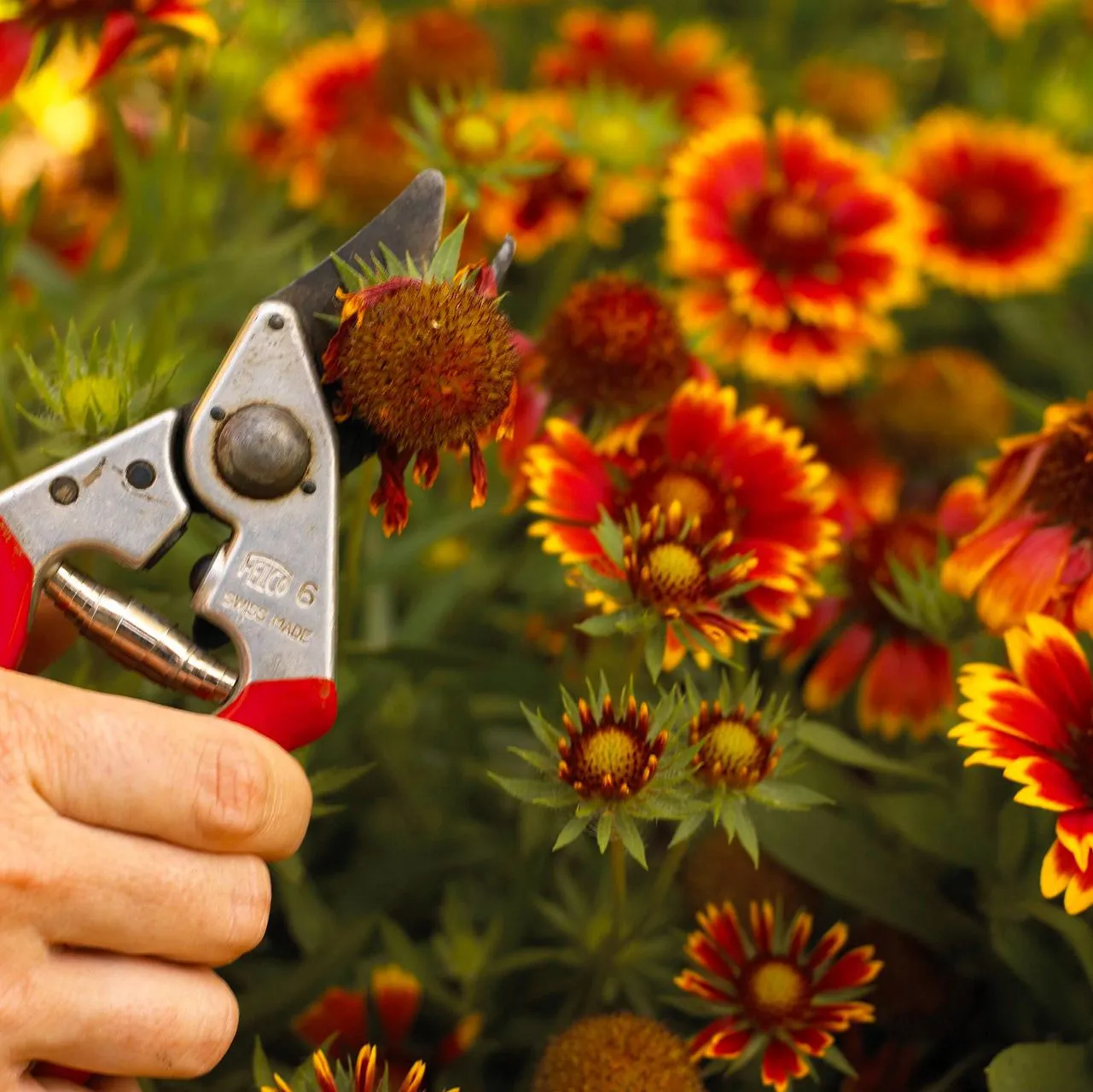
Removing spent flowers, or deadheading, is something we should do for all cut-and-come-again flowers, dahlias included. Removing the old, faded bloom and the developing seed head beneath it encourages the plant to push forth another flower. This quick garden task also keeps dahlias looking neat and attractive. Dahlia blooms can become a brown, soggy mess once past their prime.
To deadhead dahlias, you’ll need a pair of floral snips or pruning shears, or even a pair of scissors. Instead of cutting directly below the bloom, follow the stem downward into the plant. Cut where the flower stem joins a main stem, or in the case of a main stem bloom, cut two to three leaf nodes down. Cutting deeply encourages the plant to push out longer stems, which are easier to use in bouquets. If there are a couple of side blooms on the same stem that aren’t done yet, it’s okay to simply snip off the old bloom and cut deeply once the side blooms have also faded.
2. Water Consistently
Dahlias need even moisture, and while they are fairly sturdy, the heat of late summer can still cause problems. The guideline is about an inch of water per week, but that will need to be adjusted based on your soil type, plant spacing, mulch, and the weather.
The best way to determine if your dahlias need to be watered is to use your finger. Move the mulch and push your finger into the soil up to the main knuckle. If it feels dry, it’s time to water. If it still feels cool and damp, they’re fine. If your dahlias are mixed in with other plants and those flowers or vegetables are wilting, that’s also a good indicator, and it’s okay to water your dahlias along with the rest of the plants. No need for special treatment. Dahlias in pots may need watering daily or every other day in hot weather.
Watering at the base of the plants, either with a drip line, soaker hose, or with a wand on your hose, is the best way to apply water where it is needed and reduce potential problems with powdery mildew. However, if an overhead sprinkler is what you have, try to water in the morning so the foliage has time to dry before the cool temperatures of evening arrive.
3. Refresh the Mulch
Natural mulches like grass clippings, pine straw, or shredded leaves break down over time, which is great for the soil, but it also means a late-season refresh is in order. A thin mulch layer doesn’t suppress weeds or conserve soil moisture as efficiently. In late summer and early fall, that can mean more frequent watering or more weeding. Significant soil moisture swings can stress the plants.
If your dahlias are planted closely together, they tend to naturally shade the soil enough. Any exposed soil between plants, however, should be mulched to conserve soil moisture, protect it from hot afternoon sun, and smother any germinating weeds. Toss down a new layer as needed, but try to prevent the mulch from piling up around the base of the plant.
Related
4. Stake Taller Varieties
Many dahlia varieties will reach chest-high or higher by September, and a wind or heavy rain can start to tip them over. The best time to stake them was when they were planted, or in early summer, but when plants are young, you may not realize they’ll get so tall.
When staking dahlias in late summer, take care to avoid spearing the tubers. Fortunately, a plant that needs staking is often quite large, so getting a stake too close is easy enough to avoid. When choosing where to drive the stake, imagine trying to avoid popping a basketball under the stem, which is about the size of most dahlia tuber clumps. Staying about eight inches away from the central stem is a good start.
For single plants, drive a stake into the ground, run some twine to the main stem, and make a loose loop. If the plant leans west, use a stake on the east side to provide a slight opposite pull.
For dahlias in rows, drive a few sturdy metal posts along the edge and run twine around the row about halfway up the plants. You’ll still provide support, and the twine will be partly hidden by foliage, with the blooms popping up above.
5. Fertilize as Needed
Dahlias are heavy feeders, meaning they need lots of nutrients to fuel all that blooming. In late summer, watch for signs of a nutrient deficiency. Most varieties should have deep green foliage. Assuming it is not thirsty, waterlogged, pest-damaged, or suffering from root trouble, a dahlia that is pale overall, displays yellowing older leaves, and is slowing down may need a little nitrogen.
While many bloom-booster products are on the market, a plant showing these symptoms may respond well to a balanced, general-purpose liquid fertilizer like a 10-10-10. September is near the end of the season, so avoid high-nitrogen doses, which can interfere with tuber hardening and storage. Slow-release products may not release nutrients quickly enough to be helpful before frost ends the season.
Dahlias grown in containers are especially susceptible to nutrient issues, because the frequent watering washes away much of the nutrient content in our potting mix. For dahlias in containers, a regular application of water-soluble fertilizer, following the directions on the label, can keep them green and flowering.
6. Watch for Pests
Late summer is often when pest insect pressure builds. Japanese beetles, aphids, grasshoppers, and other plant-eating pests can be a problem. A few munched leaves on a mature plant isn’t a big deal, but if they are causing issues with the flowers, that’s another story.
Fortunately, many dahlia insect problems in September can be solved by walking through the garden in the morning and plucking the offending insects off the plants by hand, then dropping them into a container of soapy water. For aphids, wash them off the plants with your garden hose. A patch of dahlias is a pollinator magnet, so avoid pesticides. When scouting for pests, don’t forget to look at the undersides of the leaves.
7. Protect from Early Frosts
Fall weather can be fickle. One day it’s 85°F; the next, the forecast calls for 30°F. Often, the first light frost is followed by a spell of warm weather, when you could be enjoying more dahlia blooms for a few weeks. Dahlia plants will not tolerate frost, even though the tubers will be fine for those early chilly nights.
To save your flowers from an early frost, spread frost cloth over them in the afternoon. By morning, the cloth can get quite heavy with dew, so support the cloth with stakes, twine, or hoops to keep the dahlia stems from bending over. Anchor the frost cloth to the ground to prevent cold air from flowing underneath, and to keep it from blowing away in the wind. A few rocks, bricks, or whatever you have lying around will do.
Light frost cloth will protect the plants from brief temperature dips down to 2 to 3°F below freezing. Pull the cloth back during the day after it warms up above freezing to allow airflow, and of course, to enjoy your dahlia blooms a while longer. Once the forecast is for continuous frosts, it’s time to say farewell for the season.
- <span>Gardening</span>
- <span>Caring for Your Yard</span>
- <span>Garden Care</span>