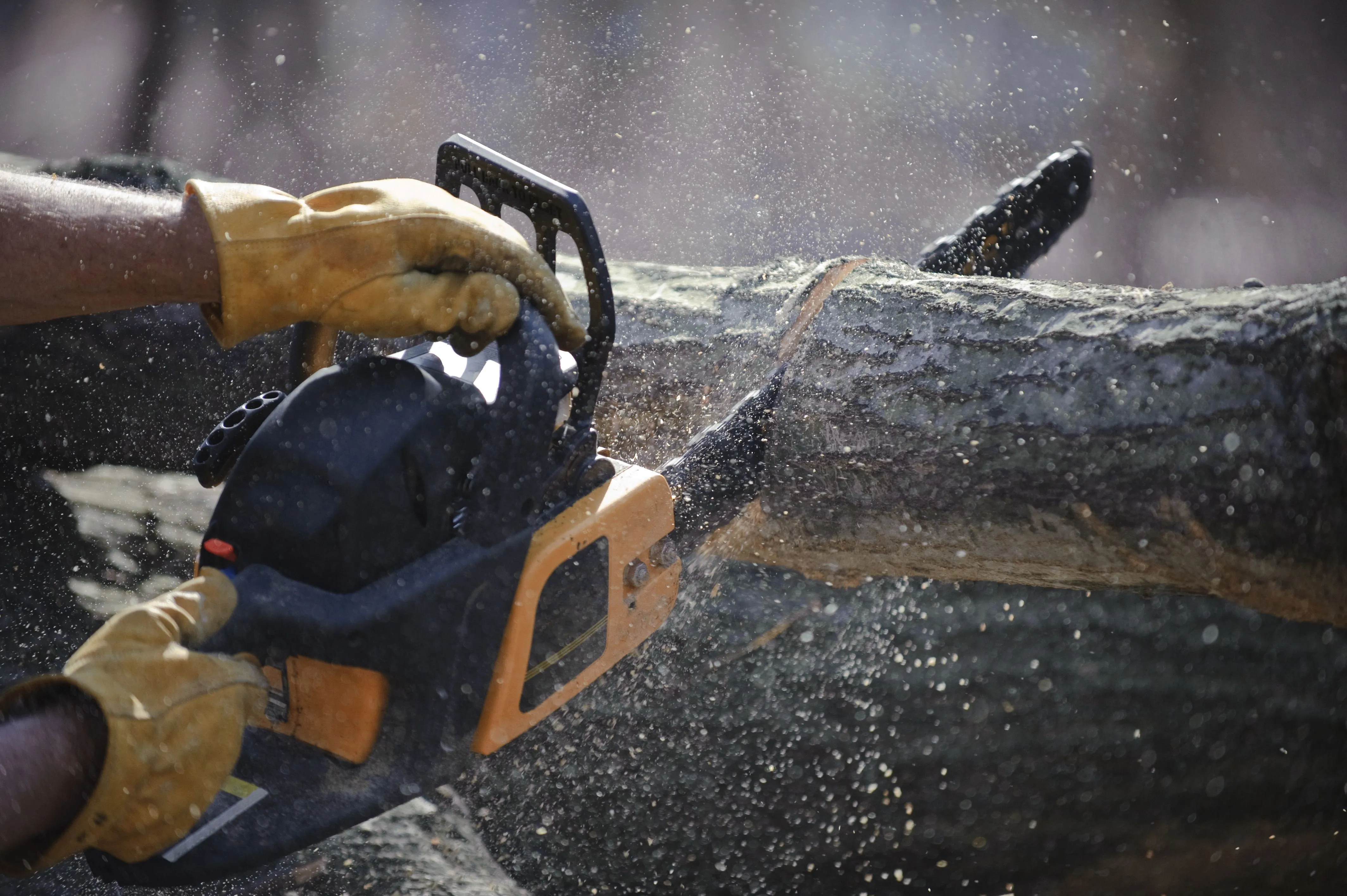
- Choose a chainsaw suited to your experience and task, ensuring it has safety features, and keep it well-maintained.
- Wear protective gear, including long sleeves, steel-toe boots, gloves, earplugs, and eye protection.
- Use proper technique: maintain a steady grip, cut with the bottom chain, and avoid raising the saw above shoulder height.
When it comes to useful, labor-saving devices, chainsaws are at the top of the list. They can help you accomplish in minutes what would take hours or even days if you were working with an axe and handsaw to cut through big trees or logs. However, that efficiency comes with danger. Accidents and misuse are all too common with chainsaws. Fortunately, you can lessen the chance of injury by using the right equipment and protective apparel and following safe operating procedures. Here’s what you need to know to use a chainsaw safely.
Choosing a Chainsaw to Use
Choose a chainsaw that’s right for the job and right for you with these tips.
The Right Tool
Today’s chainsaws are more ergonomic and vibrate less than those of previous generations, so they’re less tiresome to use. Moreover, they come with built-in safety features that older saws may not have.
Some examples of these safety features include:
- A chain catcher to intercept a chain if it detaches or breaks
- A chain stop that engages if the chainsaw suddenly kicks back and causes your hand to hit the kickback guard
- A throttle lock to keep the throttle from accidentally advancing
- A hand guard to protect the hand from a broken chain
- An easily accessible stop switch.
The Right Size
Smaller chainsaws are recommended for those new to chainsaw work. They are more maneuverable and less taxing on the body than larger, heavier chainsaws, which can make your hands and arms tired and pose a safety risk. Use a chainsaw that fits the task at hand: for example, a large chainsaw of 18 or 20 inches for bigger logs and a smaller chainsaw of 14 or 16 inches for branches and smaller trees.
The Right Condition
No matter which chainsaw you use, it should be in good working order, have a sharp blade for efficiency, and have a full oil tank so the chain stays lubricated. Keep the tension at a point where the chain doesn’t sag but can move freely in its track around the bar. (Bear in mind that as the chain heats up from use, it will sag slightly.) A chain that’s too loose can come off the bar; one that’s too tight will wear out the bar quickly and might not cut at all.
Related
What to Wear
A little protective gear can go a long way toward keeping you safe and injury-free while using a chainsaw.
Clothing
No matter how hot it is, pants and a long-sleeved shirt are highly recommended when using a chainsaw. Getting sweaty is better than getting nicked up by flying debris like sticks and bark fragments. You might even consider chainsaw chaps, which strap over your pants and offer up to eight layers of extra protection, if you have a big job to do.
Work Boots
Steel-toe sturdy boots are a must. They are a key defense against logs rolling over or suddenly dropping out of place while you’re sawing. Although your foot should never be anywhere near the blades when you’re operating the chainsaw, a steel-toe boot could offer a little more protection if the bar and chain accidentally glance off the tip of your foot.
Heavy-Duty Gloves
Always wear protective gloves when using a chainsaw. A thick pair of leather gloves is a good start, but some gloves are made specifically for chainsaw use. One option has additional layers of protective material on the top portion of the glove that fits the hand closest to the chain, which is the one most vulnerable to injury.
Head, Face, and Ears
The noise of operating a chainsaw can damage your eardrums and lead to hearing loss, so use earplugs designed for use with machinery. Eye protection is important, too, so wear safety glasses or goggles to avoid splinters and fragments. One excellent option is a three-in-one piece of apparel specifically designed for chainsaw work: a forestry helmet with attached earmuffs and a drop-down mesh visor to protect the eyes and face from flying debris. As an added measure, you can also wear glasses or sunglasses with this helmet, depending on lighting conditions.
Risk Factors to Consider
Keep the following conditions in mind before you begin using a chainsaw to minimize safety risks.
Lighting
It is not a good idea to run a chainsaw when the sun is going down. You can’t see where you’re stepping, and it’s easy to miss safety hazards such as limbs or branches wedged in place and that can whip back toward you without warning. In good lighting, you can see those hazards and be prepared.
Weather
Wind and rain are not your friends when sawing. Neither is ice. Rain and ice can affect your footing and cause you to slip. Wind can be a challenge when you’re trying to fell a tree. Avoid sawing in poor weather if possible.
Surroundings
You don’t want anyone—people or pets—nearby when you’re operating a chainsaw. This is essential if you’re taking down a tree. You also want to survey the surroundings and clear any hazards, such as twiggy debris you could trip on or that might prevent you from retreating quickly if a limb or branch broke away unexpectedly.
Hazards
Kickbacks are among the most common and dangerous hazards. A kickback occurs when the nose of the chainsaw guide bar hits something close to what you are sawing, such as underlying limbs, branches, stumps, or logs. The chain grips the wood, causing the saw to be thrown violently backward and upward by the force of the rotating chain. Beware of branches wedged in place by another part of the tree. They can spring out unexpectedly if released from tension. Before cutting, inspect the trunk or limbs for nails, spikes, or other metal fragments.
Stamina
Always pace yourself, especially if you’re not used to heavy manual work. Work in the shade if possible and take plenty of water breaks. Accidents happen when you’re feeling tired and are not as quick to react as you otherwise would be. The work will still be there for you later, so there’s no need to rush.
Tips for Using a Chainsaw
Here are some important tips for using a chainsaw properly:
- Stand with your feet apart, left foot slightly ahead of your right foot.
- Bend your knees when cutting to avoid curving your spine and causing back strain.
- Hold the chainsaw with a steady grip and your thumbs and fingers securely wrapped around the handles.
- Keep the chainsaw relatively close to your body rather than holding it with outstretched arms. This gives it better balance and makes the saw feel less heavy and unwieldy.
- Always cut with the bottom portion of the chain, never the top.
- Never raise a chainsaw above shoulder height when making cuts.
- If you need to move to another spot after making a cut, activate the chain brake or turn off the engine rather than allowing the chain to continue rotating while you’re walking with the saw.
- Be aware of your surroundings and know where you could move quickly without obstructions if necessary.
- <span>Gardening</span>
- <span>Caring for Your Yard</span>